** WARNING: connection is not using a post-quantum key exchange algorithm.
** This session may be vulnerable to “store now, decrypt later” attacks.
** The server may need to be upgraded. See https://openssh.com/pq.html
** WARNING: connection is not using a post-quantum key exchange algorithm.
** This session may be vulnerable to “store now, decrypt later” attacks.
** The server may need to be upgraded. See https://openssh.com/pq.html
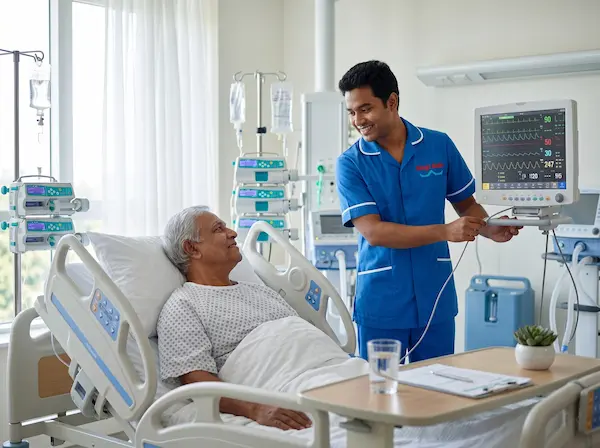
Leaving the hospital doesn’t mean recovery is finished — it often means the next, and sometimes trickier, phase is just beginning. Kings Aide provides post-hospital recovery care at home in Dhaka, so patients can continue healing under trained supervision instead of navigating discharge instructions alone or staying in hospital longer than medically necessary.
Whether it’s after surgery, a serious illness, or a hospital stay for a chronic condition flare-up, our caregivers and nurses pick up exactly where the hospital left off — following discharge instructions, monitoring for complications, and helping the patient regain strength and independence safely at home.
What’s Included in Post-Hospital Recovery Care
Discharge instruction follow-through. Making sure medication, wound care, and activity restrictions from the hospital are actually followed.
Wound & surgical site care. Dressing changes and monitoring for infection or complications.
Medication management. Accurate scheduling and administration during the recovery window.
Mobility support. Safe movement and gradual return to normal activity, reducing fall risk during a vulnerable period.
Vital monitoring. Regular checks to catch complications early, with escalation to the treating doctor if needed.
Nutrition support. Meals suited to recovery needs and any dietary restrictions from the hospital.
Who This Service Is For
Post-hospital recovery care fits any situation where a patient has been medically cleared to leave the hospital, but still needs more support than they can safely manage on their own or than family members can realistically provide alongside their own responsibilities. It’s especially valuable for:
Patients recently discharged after surgery
Patients recovering from a serious illness, infection, or a chronic condition flare-up
Elderly patients whose recovery needs closer supervision than family alone can provide — see our elderly care service
Patients discharged with equipment or instructions that are confusing to manage alone
Families who want a second layer of safety during the first weeks home
Why the First Weeks After Discharge Matter
Many complications and hospital readmissions happen in the first days and weeks after discharge — a missed medication dose, an infected wound that goes unnoticed, or a fall during a moment of overconfidence about mobility. A trained caregiver or nurse in the home during this window catches these issues early, follows the discharge plan precisely, and knows when something needs to be escalated back to the hospital rather than waited out. For many families, this window of close support is the difference between a smooth recovery and an avoidable readmission.
How Long Does Recovery Care Typically Last?
This varies widely depending on the procedure or illness — anywhere from a few days for a minor procedure to several weeks for major surgery or a serious illness. Rather than committing to a fixed length upfront, we recommend starting with the period your discharge instructions specify, then reassessing together as recovery progresses. Some patients step down to lighter home care support as they improve; others need to continue at the same level for longer than initially expected.
Typical Recovery Milestones We Support
First 48-72 hours home. The highest-risk window, focused on close monitoring, medication accuracy, and wound checks.
First one to two weeks. Continued monitoring as mobility improves, with gradual increases in independence where appropriate.
Follow-up appointments. Making sure scheduled check-ups with the treating doctor actually happen, and relaying any concerns beforehand.
Step-down to independence. Reducing caregiver hours as the patient regains the ability to manage daily tasks safely alone.
Every recovery moves at its own pace, and these stages aren’t a fixed schedule — they’re a general guide we adjust based on how the individual patient is actually doing.
Why Families in Dhaka Choose Kings Aide
Trained caregivers & nurses — matched to the level of care your discharge plan requires.
Doctor coordination — updates shared with the treating physician when needed.
Flexible duration — short-term recovery support without a rigid long-term contract.
Fast placement — we understand discharge often happens with little notice.
A trusted local agency — over 2,645 patients and families served across Bangladesh.
How It Works
Contact us before or right after discharge. Share the discharge summary and instructions.
Assessment. We review the recovery plan and recommend the right level of support.
Caregiver or nurse placement. Support begins as soon as the patient arrives home.
Ongoing monitoring. Regular updates and adjustments as recovery progresses.
Common Situations We Handle
“We’re being discharged tomorrow and I don’t know how to manage the wound care.” A nurse can take over wound care and dressing changes immediately.
“My parent had surgery and lives alone.” Live-in or daily recovery support covers the period they can’t safely manage independently — see our live-in caregiver service.
“We’re worried about readmission.” Close monitoring during the highest-risk recovery window reduces that risk significantly.
“The discharge paperwork is confusing.” Our staff can walk through it with the family and make sure it’s actually followed correctly.
Staff Training & Safety Standards
Recovery care staff go through the same rigorous screening as the rest of our nursing and caregiving team: background verification before placement, training in wound care and medication administration, and clear guidelines on recognizing complications early and escalating to the family and treating doctor without delay. For post-surgical cases specifically, we prioritize staff with direct experience in the type of recovery involved, so the caregiver isn’t learning on the job during a period when precision genuinely matters.
Preparing Your Home for a Patient’s Return
A few practical things make recovery easier once a patient is home: clearing paths of trip hazards, arranging a bed on the ground floor if stairs are a concern, having discharge medications and equipment ready before arrival, and setting up a comfortable space for the caregiver or nurse to work from. During your consultation, we can walk through what makes sense for the specific procedure or condition, so the home is properly set up before the patient walks through the door rather than scrambling to adjust afterward.
Supporting the Family, Not Just the Patient
Recovery is stressful for the whole household, not just the patient — family members often feel responsible for round-the-clock vigilance on top of their normal routine, which is exhausting and, more importantly, not sustainable. Bringing in trained recovery support means family members can be present for emotional support and company rather than carrying the entire clinical responsibility themselves, worrying whether they’re doing wound care correctly or whether a symptom they’ve noticed is significant.
Pricing & Availability
Recovery care pricing depends on the level of nursing required, the length of the recovery period, and whether coverage is scheduled or continuous. Because discharge often happens quickly, contact us as soon as you know a discharge date so we can arrange coverage in time, and we’ll provide a clear quote based on the discharge plan.
Because recovery periods are naturally short-term and don’t require the long-term commitment of ongoing home care, many families find this one of the more approachable services to arrange — it’s a defined period with a clear end point, built around the specific discharge plan rather than an open-ended arrangement.
Areas We Serve
Kings Aide is based in Baridhara and provides post-hospital recovery care to families across Dhaka, including Gulshan, Banani, Dhanmondi, and Uttara. Get in touch as soon as a discharge date is confirmed to arrange coverage.
Frequently Asked Questions
Do you provide recovery care after specific surgeries, like orthopedic or cardiac procedures?
Yes, we support recovery from a wide range of procedures. Share the type of surgery and discharge instructions during your consultation so we can match a caregiver or nurse with relevant experience where possible.
Is overnight coverage available during recovery?
Yes, overnight and live-in coverage can be arranged for patients who need close supervision around the clock during the early recovery period.
What happens once recovery care is no longer needed?
We wind down care as the patient regains independence, on whatever timeline actually fits — there’s no requirement to continue past the point where support is genuinely needed.
How soon before discharge should we contact you?
As soon as possible — ideally a day or two before discharge, though we understand this isn’t always predictable and will do our best to arrange coverage on short notice.
Can your staff handle wound care and dressing changes?
Yes, our nurses are trained in wound care and dressing changes, following the specific instructions provided at discharge.
What if the patient’s condition worsens during recovery?
Our staff are trained to recognize warning signs and escalate immediately — contacting the family and treating doctor, and recommending a return to hospital if necessary.
Do you coordinate with the hospital’s discharge team?
We work from the discharge summary and instructions provided, and can coordinate directly with the treating doctor as recovery progresses.
Can recovery care transition into longer-term home care if needed?
Yes, if recovery takes longer than expected or reveals an ongoing need, we can transition smoothly into home care or elderly care without starting over with a new provider.
How do I get started?
Contact us as soon as you have a discharge date, or call us directly with the patient’s condition and discharge instructions, and we’ll arrange the right level of support.
Kings Aide has supported over 2,645 patients and families across Bangladesh, including many post-surgical and post-hospital recovery cases. We know how disorienting discharge day can feel — a stack of instructions, unfamiliar medications, and a patient who still needs real care — and our goal is to make that transition feel manageable rather than overwhelming for your family.